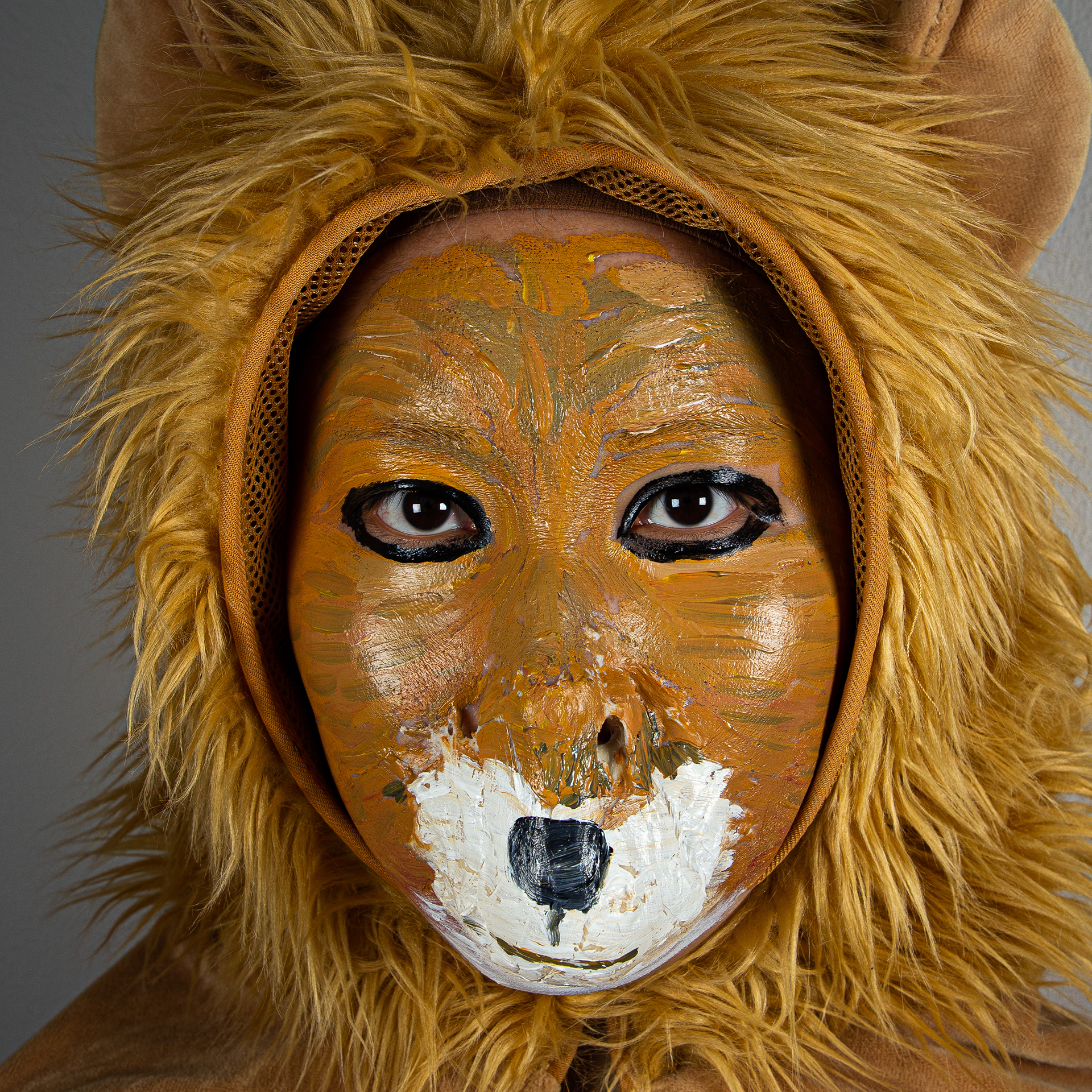
Exactly but not sure, Single-channel video, 02:07, 2022
Memory is constantly changing. As it passes through the past and the present, it is transformed through being erased, exaggerated, reduced, and reshaped, giving rise to new memories. The images contained in memory are a combination of traces from past experiences and the present consciousness that recalls them. In this sense, memory itself is an act of creation.
During the COVID-19 pandemic, while living in Germany, the artist regularly kept in touch with family members in Korea through video calls. At one point, the artist realized that they were no longer certain what their family members actually looked like. Despite having spoken with them on video only recently, the mental images they held of them felt uncertain. The longer family members were encountered primarily as flat images on a screen, the more unstable and strangely faded their remembered appearances became.
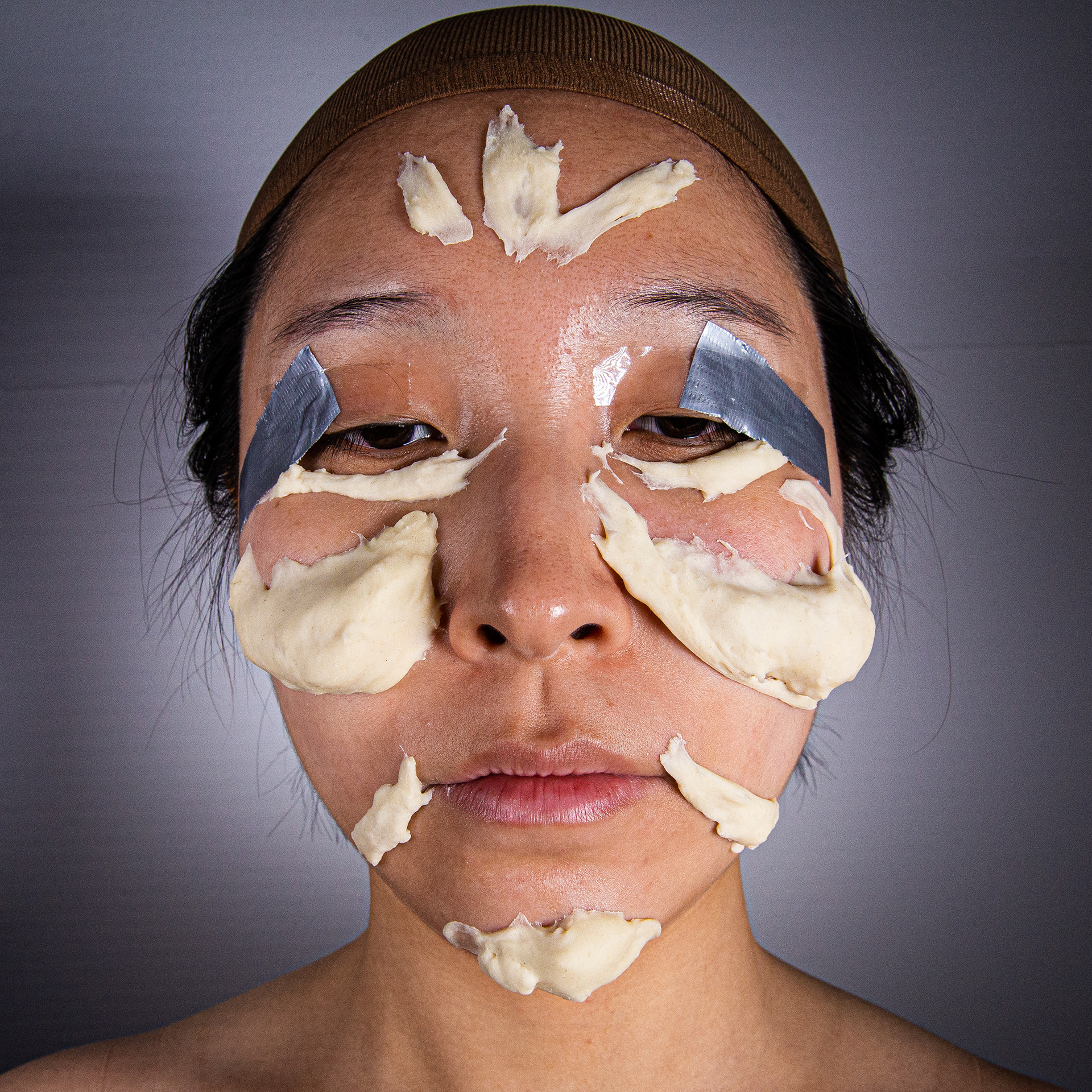
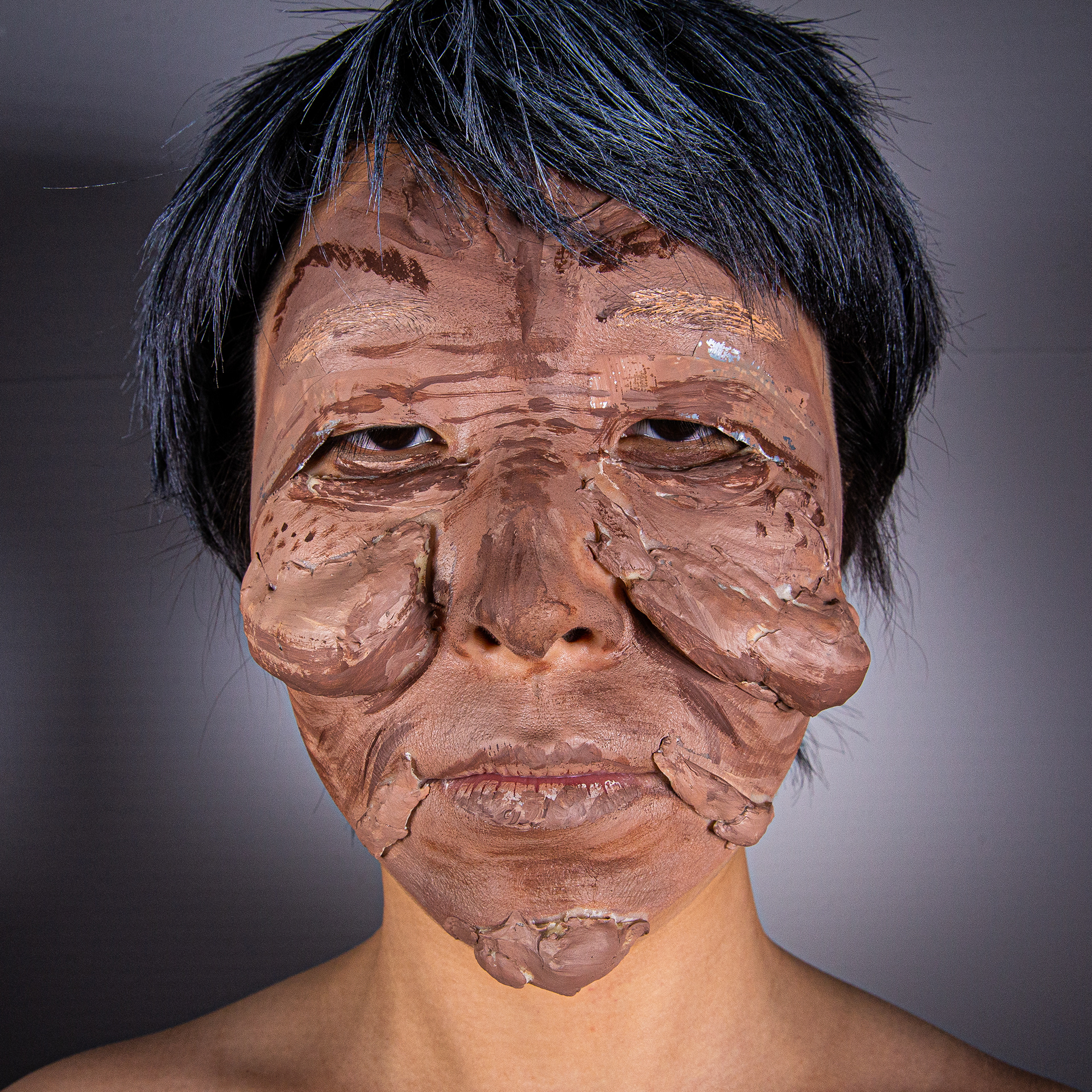
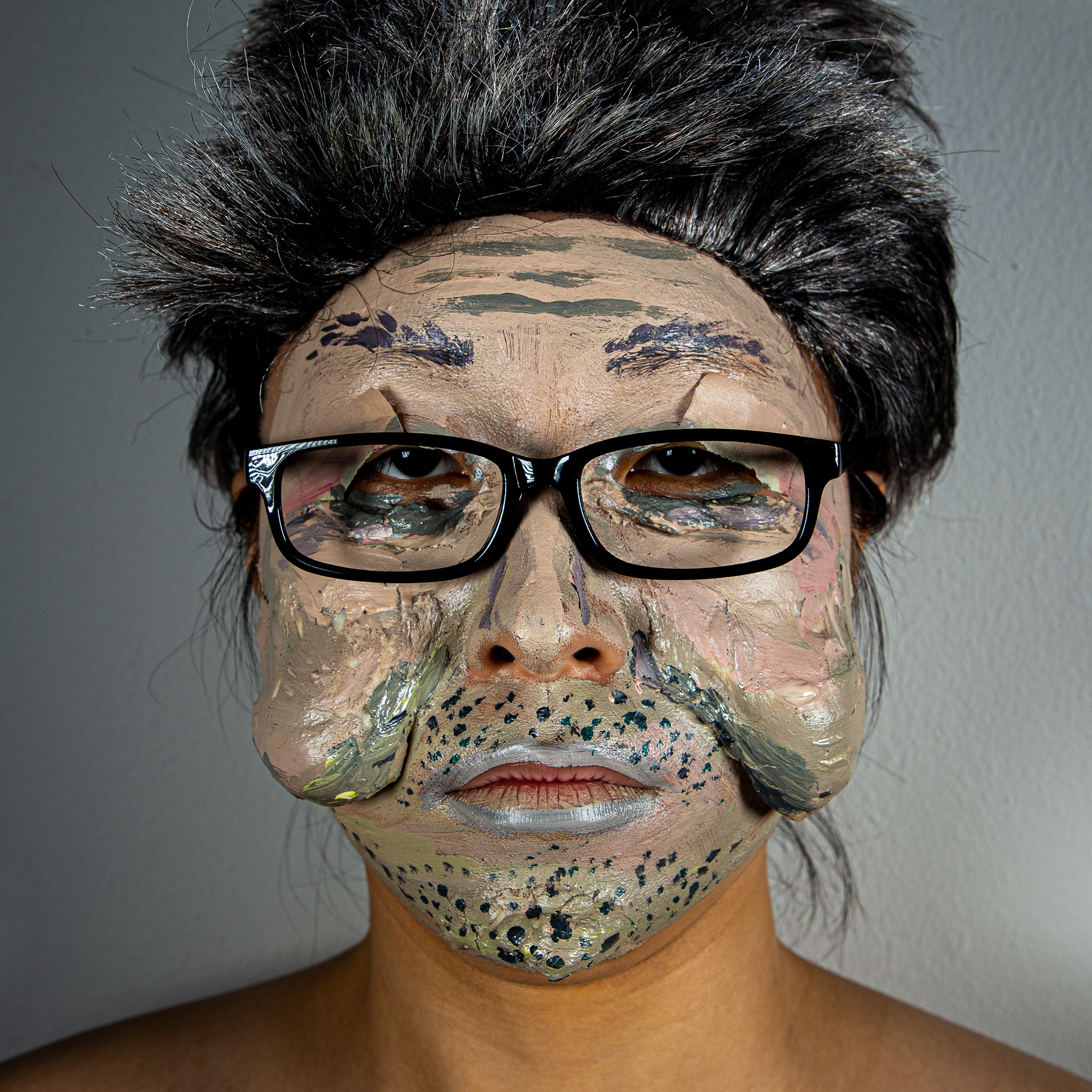
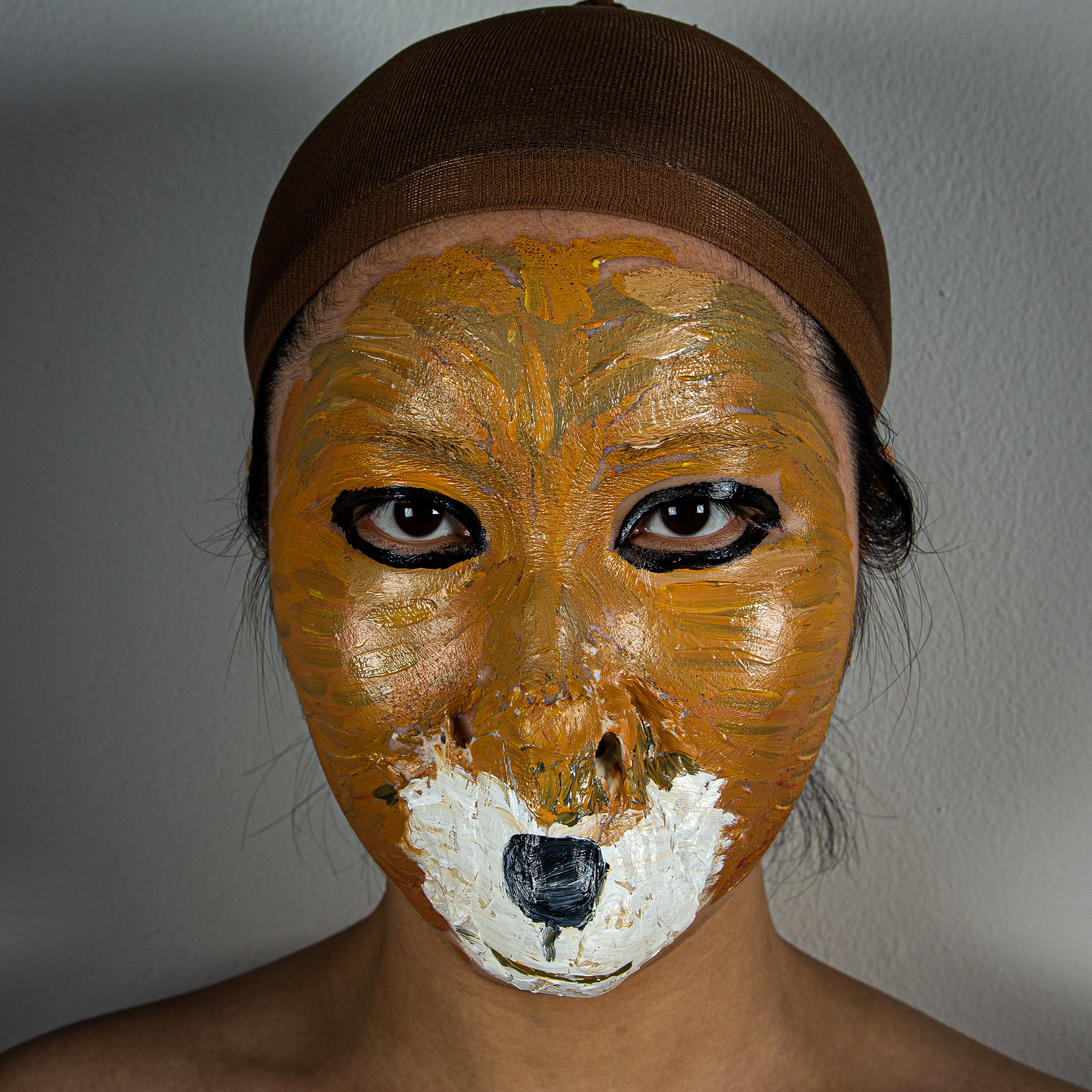
Alone in front of a mirror, the artist imagined loved ones and disguised themselves as them. The worried face of the artist’s mother, as preserved in memory, contained dark spots, drooping eyes and cheeks, and a furrowed brow marked by wrinkles. The playful face of the artist’s father carried deep smile lines, bluish beard stubble, and gray eyebrows. Even the color of the fur of a beloved dog, no longer alive and no longer touchable, remained vividly present in memory.
Without photographs or videos, the artist visualized these images individually, images whose accumulation in memory could no longer be traced. Recalling these mental images, precise yet uncertain, the artist transformed into them using dough, tape, and paint. Having become these reconstructed figures, the artist imitated (nachmachen) their present or past selves, who could only be reached through video calls. The latency that prevents immediate imitation reveals the gap between reality and becoming (Devenir).